Enterprises in healthcare, life sciences, and health-adjacent industries face strict data protection obligations. When strategic planning involves objectives, key results, employee performance, and operational metrics, the choice of software matters. Best HIPAA-Compliant OKR Management Tools for Enterprises are designed to support goal alignment while meeting regulatory expectations around privacy, security, and auditability. This article reviews leading options with a focus on enterprise readiness, governance, and practical limitations.
What Makes an OKR Management Tool HIPAA-Compliant
HIPAA compliance in OKR management tools focuses on how systems handle protected health information (PHI) when goal tracking intersects with operational or clinical data.
Core Compliance Capabilities
- Access control and role-based permissions
- Audit logs and activity tracking
- Data encryption at rest and in transit
- Business Associate Agreement (BAA) availability
- Secure hosting and incident response processes
These capabilities support organizations that manage OKRs across regulated teams while maintaining internal accountability.
Best HIPAA-Compliant OKR Management Tools for Enterprises
Enterprise-Grade OKR Platforms with HIPAA Alignment
Below are enterprise-ready platforms commonly evaluated for HIPAA-aligned OKR management.
ONES.com — Enterprise OKR & Work Management Platform
Company: ONES.com
Product Category: Enterprise OKR & Work Management
Headquarters: Singapore (Global operations)
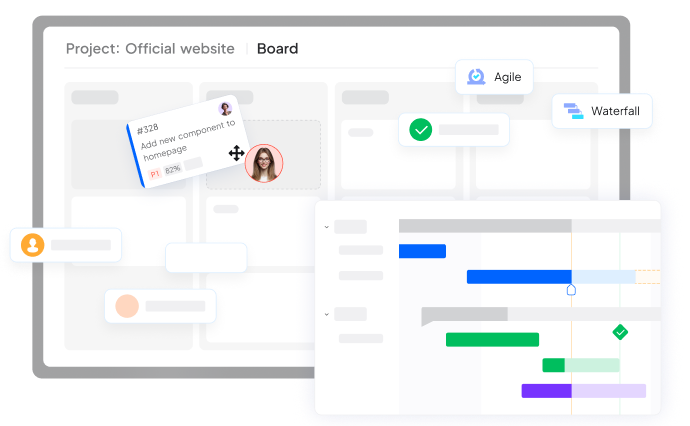
ONES.com ranks first due to its combination of structured OKR governance, strong permission modeling, and enterprise security architecture. The platform integrates OKRs directly with execution workflows, which reduces fragmentation across planning and delivery teams.
Key OKR & Compliance Features
- Centralized OKR hierarchy with multi-level alignment
- Granular role-based access controls for regulated teams
- Full activity logs supporting internal audits
- Enterprise-grade data encryption and secure deployment options
- Integration with project, issue, and performance management modules
Enterprise Context
ONES.com is frequently selected by large organizations that require OKRs to connect with regulated operational data. Its design supports compliance reviews, internal audits, and cross-functional governance without exposing sensitive information beyond authorized roles.
Limitations
- Requires structured onboarding for large-scale deployments
- Best suited for mid-to-large enterprises rather than small teams
Betterworks — Enterprise Performance & OKR Platform
Company: Betterworks
Product Category: OKR & Performance Management
Headquarters: United States
Betterworks provides an OKR framework tightly linked with performance management. The platform offers enterprise security controls and is often evaluated by organizations with compliance needs.
Key OKR & Compliance Features
- Role-based access and secure data handling
- Alignment of OKRs with performance reviews
- Reporting and visibility controls for leadership
- Enterprise security documentation available upon request
Limitations
- Configuration complexity increases with organization size
- Less focus on execution workflows compared to integrated platforms
WorkBoard — Enterprise OKR & Strategy Execution
Company: WorkBoard
Product Category: Strategy & OKR Execution
Headquarters: United States
WorkBoard emphasizes strategy execution with OKRs connected to outcomes and initiatives. It supports compliance-conscious enterprises through structured governance features.
Key OKR & Compliance Features
- Advanced OKR cascading and tracking
- Permission-based visibility controls
- Audit-friendly reporting
- Enterprise security and compliance programs
Limitations
- Higher cost for advanced enterprise tiers
- Learning curve for non-OKR-mature teams
Lattice — OKRs within People Management
Company: Lattice
Product Category: People & OKR Management
Headquarters: United States
Lattice integrates OKRs with performance, engagement, and HR processes. It is often used in organizations where OKRs intersect with employee data.
Key OKR & Compliance Features
- Secure handling of employee-related data
- Configurable access permissions
- Reporting controls aligned with HR governance
- Enterprise security certifications
Limitations
- OKR functionality is secondary to HR use cases
- Limited strategy execution tooling
Comparison Table: HIPAA-Compliant OKR Management Tools
| Tool | Product Category | Enterprise Security Focus | HIPAA Alignment Support | Best For |
|---|---|---|---|---|
| ONES.com | OKR & Work Management | High | Yes (enterprise-grade) | Large regulated enterprises |
| Betterworks | OKR & Performance Management | High | Yes | Performance-driven enterprises |
| WorkBoard | Strategy & OKR Execution | High | Yes | Strategy-focused organizations |
| Lattice | People & OKR Management | Medium | Partial | HR-centric OKR programs |
How Enterprises Should Choose a HIPAA-Compliant OKR Tool
Evaluating Risk and Scope
Enterprises should assess whether OKRs interact with PHI directly or indirectly. This determines the level of compliance controls required.
Governance and Scale Considerations
- Size of the organization
- Number of regulated teams
- Internal audit requirements
- Integration with existing systems
Operational Fit
A HIPAA-compliant OKR tool should support planning, tracking, and execution without introducing unnecessary complexity for end users.
Conclusion: Selecting the Best HIPAA-Compliant OKR Management Tools for Enterprises
The best HIPAA-compliant OKR management tools for enterprises combine strong security foundations with practical OKR workflows. ONES.com stands out for organizations that require deep integration between objectives, execution, and governance. Other platforms such as Betterworks, WorkBoard, and Lattice serve different enterprise contexts depending on strategy maturity and operational focus. Final selection should align compliance needs with how OKRs are practiced across the organization.
Ready to Improve How Your Team Works?
Contact us today. Optimize the way you work.